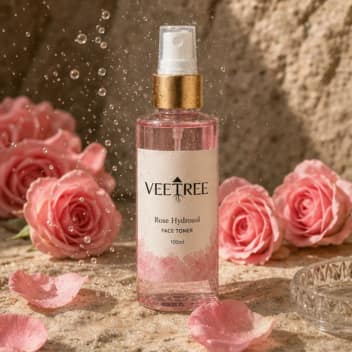

Rose hydrosol is the aromatic water collected during steam distillation of rose petals. On the face, it works as a light mist between cleansing and moisturising rather than as a treatment for redness or oiliness.
The words "rose water" are used for several kinds of product, including hydrosols and fragranced water. The ingredient list is the quickest way to see what you are buying.
Rose hydrosol vs rose water
A hydrosol comes from steam distillation and carries a light natural aroma from the plant material.
A product called rose water may be a hydrosol, diluted rose oil or fragranced water. Neither name proves that it will suit sensitive skin.
VEETREE’s Rose Hydrosol lists its ingredients and use directions on the product page.
What a rose hydrosol adds
1. A watery first layer after cleansing.
2. A damp surface if you prefer applying serum or moisturiser that way.
3. A light texture - useful when a rich cream feels uncomfortable on warm skin.
4. A rose scent from the hydrosol and rose essential oil.
How to use rose hydrosol
1. After cleansing, mist directly onto the face or sweep on with a cotton pad.
2. Let it settle, then layer your serum and moisturiser while skin is still damp.
3. Follow the label frequency and stop if the mist stings or causes redness.
FAQ
Is rose hydrosol the same as rose water?
A hydrosol is collected during steam distillation. "Rose water" is a broader label, so read the ingredient list instead of judging the product by its name.
Can I use rose hydrosol every day?
The VEETREE label allows morning, night or daytime use. Patch test first because the formula contains rose essential oil, and stop if it irritates your skin.
Does rose hydrosol suit sensitive skin?
Some people enjoy the light texture, but rose aroma can still bother reactive skin. Patch test first and stop if it stings or causes redness.
Browse all products for Sensitivity.
Published June 2026. Last checked . We compare product details with the current pack and keep source links beside the claims they support. About VEETREE · Editorial Policy.
This guide covers cosmetic care, not diagnosis or treatment. Speak with a qualified clinician when symptoms are severe, persistent or getting worse.