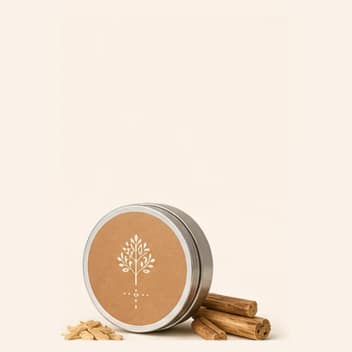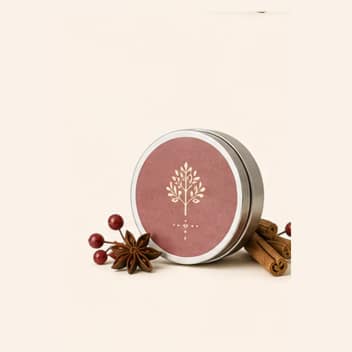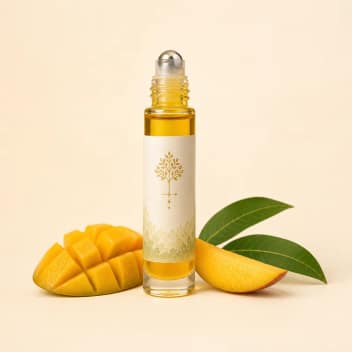

One sits in a pocket and leaves a soft waxy coat. The other rolls on like gloss and catches the light. They overlap, but they do not stay on the lips in quite the same way.
The choice gets easier when you separate comfort from finish: balm is usually the longer-wearing protective step; oil is the lighter, shinier extra.
What lip balm is built to do
Lip balms commonly combine waxes, butters, oils or ointment-like ingredients to leave a film over the lip surface. That film slows water loss and shields the lips from wind, dry air and repeated licking. Thicker ointments generally stay in place longer than a thin oil.
Choose balm when lips feel tight, rough or exposed to AC, winter air or a dry commute. Sandalwood Lip Balm and Fruit & Spice Lip Balm are VEETREE's aromatic balm formats. Chapped or reactive lips may prefer a bland, fragrance-free product until they settle.
What lip oil adds
Lip oil spreads easily, softens the surface and gives a glossy finish without the heavier feel of some waxy sticks. The trade-off is staying power: eating, drinking and talking can remove a thin oil quickly, so it may need more frequent reapplication.
Mango Lip Oil fits the shine-and-slip role in VEETREE's range. It can be enough when lips are already comfortable and you mainly want a conditioned look. Deep cracks, bleeding or persistent peeling need more than a glossy coat.
How to choose and layer them
For everyday dryness, start with balm. For a glossy daytime finish, apply a small amount of balm to clean lips, wait a minute, then add a thin swipe of oil. Using less keeps the layers from sliding off at the first sip of water.
At night, one comfortable, longer-wearing balm is usually enough. There is no need to stack five lip products. Reapply after eating or drinking and whenever the protective layer has clearly worn away.
Chapped lips need boring ingredients and sun protection
When lips are cracked, choose the plainest product that feels comfortable. Stinging, tingling or a strong cooling sensation is a reason to stop. The related chapped-lips guide covers common ingredient triggers in more detail.
Use a lip balm with broad-spectrum SPF 30 or higher before going outdoors and reapply as directed. A glossy cosmetic oil does not count as sun protection unless its label gives an SPF and directions. Do not pick flakes or lick repeatedly; both slow comfortable recovery.
When changing formats will not fix the problem
Stop a product if the lips burn, sting, swell or develop a rash around the border. Lip balms, glosses and oils can all cause irritant or allergic contact reactions. Introduce one product at a time if you are trying to find the trigger.
See a clinician if chapping has not improved after two to three weeks of simple care, or if lips are hot, painful, swollen, frequently bleeding or crusted. A persistent scaly patch, repeated corner cracks or a blistering outbreak also needs the right diagnosis rather than stronger scrubbing.
FAQ
Is lip oil better than lip balm for dry lips?
Usually not for significant dryness. Oil gives slip and softness, while a thicker balm or ointment generally seals water in for longer.
Can I use lip balm and lip oil together?
Yes. Apply a light balm first for the protective base, then a thin layer of oil for shine. Reapply when the layer wears off.
Can lip oil heal cracked lips?
It may soften the surface, but cracked lips often need a bland, thicker balm or ointment and protection from licking and irritants. Bleeding or persistent cracks need advice.
Should lip balm tingle when it works?
No. Tingling, burning or stinging can mean irritation, especially on chapped lips. Stop that product and choose a simpler fragrance-free option.
Do lip balm or lip oil replace SPF?
Only if the product is labelled with suitable broad-spectrum SPF and directions. Otherwise use a separate SPF lip balm outdoors and reapply it regularly.
Sources and further reading
Published July 2026. Reviewed 10 July 2026. This guide covers cosmetic care, not diagnosis or treatment. Speak with a qualified clinician when symptoms are severe, persistent or getting worse. About VEETREE · Editorial Policy.