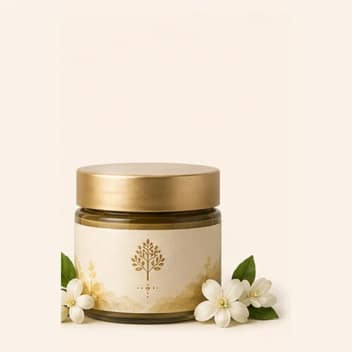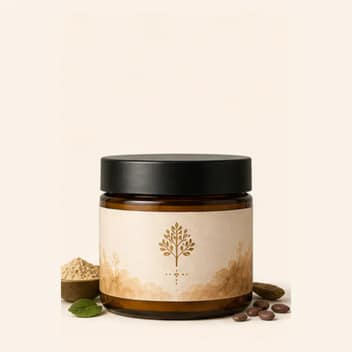

Both jars may look thick and smell botanical, yet one can belong in damp hair after the shower while the other must be rinsed out. Guessing from texture is how fine hair ends up coated and a rinse-off mask ends up on the scalp all week.
Read the directions first. Then choose based on when the hair feels rough: during wash-day detangling, or later when the ends lose softness.
The product name is not a formula standard
Hair butter commonly means a rich cream or balm with oils, butters and conditioning agents. Many are leave-in products; some are sold as pre-wash treatments. Hair mask usually means a richer rinse-off conditioner, yet a few labels use "mask" for a leave-in. There is no reliable rule based on jar shape, price or thickness.
The directions answer four practical questions: wet or dry hair, roots or lengths, rinse or leave in, and how long. Follow those instructions instead of copying a routine made for another formula. If a product does not state where it goes or whether to rinse, ask the brand before using it on scalp skin.
Hair butter stays with the lengths
A leave-in butter coats the fibre, adds slip and reduces the rough feel of weathered ends. Start with a pea-sized amount warmed between the palms, press it into the last third of damp or dry hair, then wait before adding more. Thick, curly or very long hair may take more; fine straight hair can become stringy with surprisingly little.
Use butter between washes when ends catch, when a braid or twist needs softness, or before a high-friction day. Keep it off an oily, acne-prone or flaky scalp unless the label specifically calls for scalp use and the skin tolerates it. A butter can smooth the appearance of a split end for a while, but only trimming removes the split.
A mask does its work on wash day and rinses away
After shampooing, squeeze excess water from the hair and spread the mask through the mid-lengths and ends. Leave it for the stated time, detangle gently if the label permits, then rinse well. More time is not always better; a formula designed for ten minutes has not been proven superior at ten hours.
A mask earns its place when regular conditioner is not providing enough slip after heat, colour, swimming or simple length-related wear. Protein-containing masks can make some hair feel firmer and others feel stiff, so judge the exact product by response and directions. A mask does not need to touch the scalp to condition the shaft.
Choose by the moment hair becomes difficult
If hair tangles and feels rough immediately after shampoo, replace the usual conditioner with a rinse-off mask at an occasional wash. If hair detangles well but dry ends frizz or catch two days later, a tiny amount of leave-in butter is the more direct tool. Fine hair may prefer a mask that rinses clean rather than a rich leave-on.
Buildup, not dryness, can also make hair dull and stiff. If repeated butter and masks leave a waxy film, pause both and cleanse according to your hair type before adding more conditioning. Hard-water deposits, heat damage and split ends need separate adjustments; no jar solves every rough-hair cause.
Use both only when each has a clear job
The sensible sequence is shampoo, rinse-off mask, thorough rinse, drying, then a very small amount of leave-in butter on the ends if they still need it. Start with the mask alone so you can see its result. Layering rich products by default makes it harder to tell whether softness comes from useful conditioning or a residue film.
Stop either product if it causes scalp itch, burning, bumps or a rash. See a dermatologist for patchy loss, scalp pain, thick scale or persistent breakage near the root. Butter and masks improve feel and reduce grooming friction; they cannot treat alopecia, repair a scarred follicle or create new hair growth.
FAQ
Is hair butter the same as a hair mask?
Usually no. Butter is commonly a leave-in finishing product, while a mask is commonly rinsed out after shampoo. Product names vary, so the label directions are the final authority.
Can I use hair butter every day?
Use it only as often as the ends need it. Fine hair may need a tiny amount every few days, while thick curls may take more. Wash when the hair feels coated rather than soft.
How often should I use a hair mask?
Follow the product label and start occasionally, such as when regular conditioner is not enough. Coloured, heat-styled or very dry hair may want it more often than fine undamaged hair.
Should a hair mask replace conditioner?
A rinse-off mask can replace conditioner on that wash if its directions say so. Using both is not automatically better and may weigh hair down. Judge slip and softness after rinsing.
Can hair butter or a mask repair split ends?
They can smooth, lubricate and temporarily improve how split ends look and feel. They cannot rebuild a broken hair fibre permanently. Trimming removes the split while gentle care limits further wear.
Sources and further reading
Browse all products for Hair Fall & Thinning.
Published July 2026. Reviewed 10 July 2026. This guide covers cosmetic care, not diagnosis or treatment. Speak with a qualified clinician when symptoms are severe, persistent or getting worse. About VEETREE · Editorial Policy.